How SAML Authentication Works
TL;DR
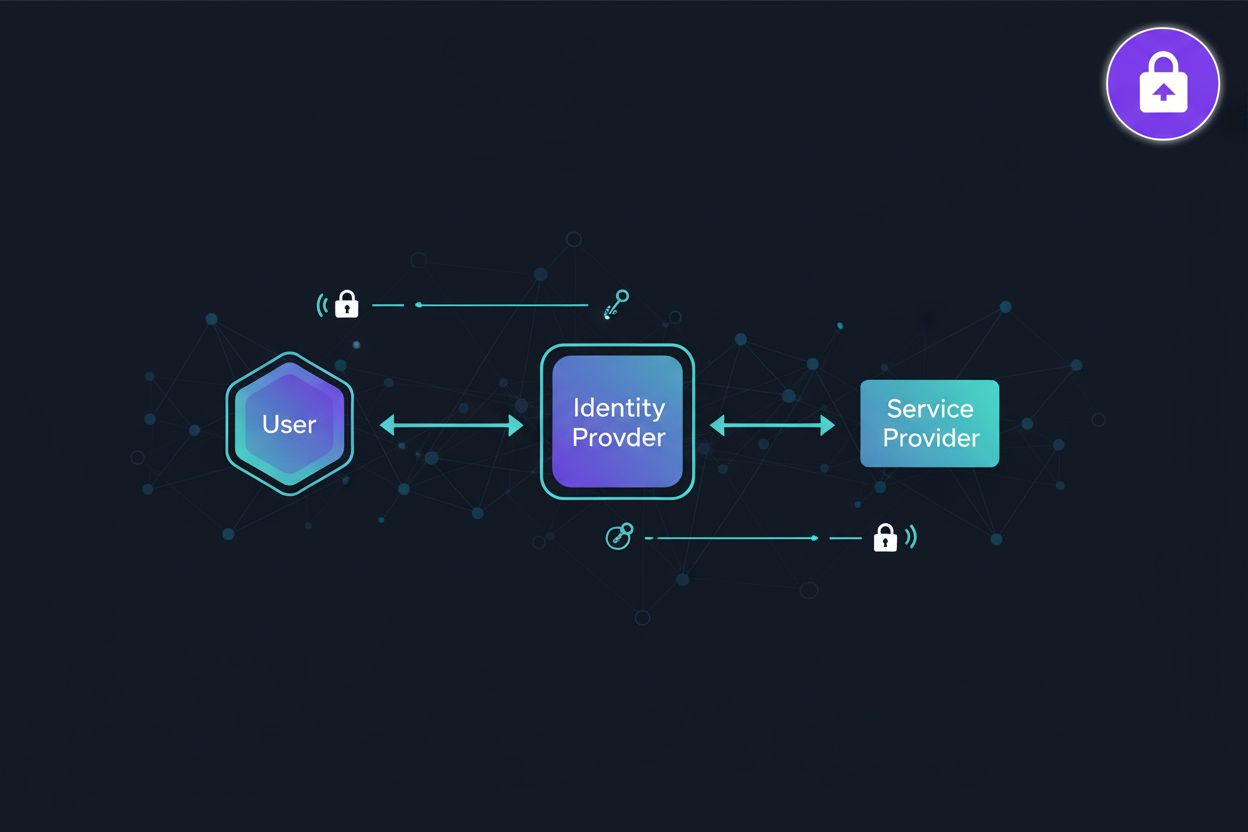
- This article covers the technical mechanics of SAML 2.0 within modern sso architectures. We explore the role of identity providers and service providers while looking at xml structures and security best practices. You will learn about authentication flows, common integration pitfalls, and how ai tools are currently reshaping the way we test identity federation to prevent breaches.
Why traditional api keys are failing enterprise needs
Ever wonder why your engineering team is constantly resetting secrets in the middle of the night? It’s usually because traditional api keys—those static strings we've used for decades—just weren't built for the scale of modern enterprise identity.
Traditional api keys are basically just "dumb" strings stored in a database. When a developer at a retail giant accidentally pushes a .env file to a public repo, the fallout is massive because those keys have no expiration date. You have to manually kill the key, which usually breaks the integration for everyone else until a new one is distributed.
- Rotation is a nightmare: Since keys don't expire on their own, rotating them requires a coordinated "dance" between the provider and the consumer. If you're managing thousands of integrations in a finance app, this downtime is unacceptable.
- Zero visibility: A standard api key doesn't tell you who is using it or what they’re allowed to do without a heavy database lookup on every single request. While some keys might have basic tags, they don't carry real metadata like scopes or tenant_id without that extra trip to the db.
- Security debt: According to a 2024 report by GitGuardian, over 12 million secrets were leaked on GitHub in 2023 alone. Static keys are the primary culprit here because they stay valid forever unless someone notices the leak.

In a healthcare setting, this "lookup" pattern creates a bottleneck. If the central database goes down, your whole auth layer dies with it. And since the key doesn't have metadata, you can't easily bake in "scopes" or "tenant_id" without that extra round-trip to the db.
We need something better that carries its own context. Next, we'll look at how jwt solves these architectural headaches by being stateless and self-describing.
The jwt advantage for api authentication
So, if traditional keys are basically just random strings that force your database to work overtime, what's the actual fix? That is where JSON Web Tokens (jwt) come in—they aren't just identifiers, they are portable data packages.
When you're dealing with enterprise customers, they usually dont want to manage another set of credentials. They want to use their existing identity providers. This is where a tool like SSOJet becomes a lifesaver for engineering teams.
It handles the heavy lifting of oidc and saml handshakes, then spits out a clean jwt that your internal services actually understand. Instead of building a custom connector for every client's Okta or Azure AD setup, you just sync the directory once.
The system maps those enterprise groups directly into the token's claims. If a user is removed from their corporate directory, the next time they try to get a token, the flow fails. It’s identity automation that doesn't require you to write a thousand lines of "glue code."
The biggest win with jwt is that they are stateless. In a typical setup, your api gateway doesn't need to ask the database "who is this?" for every single request. The token already has the answer.

By carrying scopes and permissions right in the payload, you eliminate that bottleneck we talked about earlier. Imagine a logistics app where a warehouse manager needs to update inventory. The jwt contains permissions: ["inventory_write"] and site_id: "ORD4".
The server just checks the digital signature to make sure it hasn't been tampered with. If the signature is valid, the data inside is trusted. This is massive for performance, especially in high-traffic retail environments during peak sales.
According to research from Cloudflare, using jwts helps systems scale because the auth server and the resource server dont even need to be the same machine or share a database. They just need to share a public key.
Next up, we're gonna look at how to actually structure these tokens so you don't accidentally leak sensitive info in the payload.
Security best practices for jwt implementation
Implementing jwt for your api is like giving out digital badges; if the badge maker is compromised or the badge stays valid for five years, you’re gonna have a bad time. I've seen teams treat jwt security as a "set it and forget it" task, only to realize later that their keys were basically wide open.
First rule of thumb—and I can't stress this enough—stop using HS256 for enterprise stuff. HS256 uses a symmetric key, meaning both the service issuing the token and the one verifying it need the same secret. If you have twenty microservices, that secret is now in twenty places. That is just asking for a leak.
Instead, you should always go with RS256 (RSA Signature with SHA-256). It uses a public/private key pair. Your auth server keeps the private key locked down in a vault, and your apis only need the public key to verify things.
According to OWASP, one of the biggest vulnerabilities in jwt implementation involves the "alg": "none" attack, where an attacker modifies the header to tell the server not to check the signature at all.
Always hardcode your allowed algorithms in your validation logic. Don't let the token header dictate how you verify it. Here is how you'd handle that in Python:
import jwt

# INSECURE: don't do this. It trusts the header and skips signature checks.
decoded_bad = jwt.decode(token, public_key, options={"verify_signature": False})
# SECURE: use explicit algorithms and proper validation.
try:
    decoded_good = jwt.decode(token, public_key, algorithms=["RS256"])
except jwt.exceptions.InvalidTokenError:
    print("Nice try, hacker!")
Short-lived tokens are your best friend. I usually recommend a TTL (Time To Live) of 15 to 30 minutes for access tokens. If a token gets snatched by a malicious actor in a coffee shop, they only have a tiny window to do damage.
For long-running sessions, use a refresh token pattern. When the access token dies, the client swaps a refresh token for a new one. This lets you kill a session instantly by blacklisting the refresh token in your db.
Now, I know what you're thinking—doesn't blacklisting make it stateful again? You're right, it does. This is the big trade-off: while the standard auth check remains stateless and fast, adding a revocation layer (like a Redis cache of revoked jti claims) is an optional stateful "safety net" for high-security requirements. It's better to have a tiny bit of state for revocation than a massive database lookup for every single request.

When it comes to rotating your signing keys, don't just swap them out and crash every active session. Use a graceful rotation strategy. You should support at least two public keys at once—the current one and the previous one. This gives your distributed systems time to cache the new keys without dropping traffic.
In a finance or healthcare api, where uptime is everything, this "key overlap" prevents those 2 AM "the api is down" alerts. Keep your private keys in a proper hardware security module or a managed vault service.
And whatever you do, dont commit your private keys to git. Seriously.
Next, we’re gonna dive into how you actually structure the payload so you aren't leaking the "secret sauce" of your database in the claims.
The implementation guide: building it right
Building a jwt system isn't just about picking a library and hoping for the best. If you mess up the claims or the validation logic, you’re basically leaving the back door wide open for anyone with a base64 decoder.
When you're building tokens for enterprise clients—think a large retail chain or a global fintech firm—you need standard claims to keep things interoperable. You gotta use iss (issuer) to identify who sent the token and sub (subject) for the unique user or machine id.
But the real magic happens in custom claims. For a healthcare app, you might add a dept_id or a clearance_level. Just don't go overboard; every byte you add to the payload makes the http header bigger, which can actually slow down your api requests if you're sending them thousands of times a second.
{
  "iss": "https://auth.yourprovider.com",
  "sub": "user_99283",
  "aud": "api.yourproduct.com",
  "exp": 1715642400,
  "tenant_id": "enterprise_customer_a",
  "tier": "premium",
  "scopes": ["read:reports", "write:orders"]
}
Keep your payload lean. Don't put sensitive stuff like passwords (obviously) or even internal database primary keys if you can avoid it. Use uuid strings instead. It keeps your internal architecture hidden from the outside world.
Your api (the resource server) needs to be skeptical. The first thing it should do is grab the public keys from your identity provider via a jwks (JSON Web Key Set) endpoint.
Think of jwks as a public phonebook for your keys. It’s a standard format that lets your api automatically discover new public keys during a rotation. Instead of you having to manually update a config file every time you rotate keys, the api just checks the jwks endpoint and grabs the new one. It makes the whole RS256 rotation strategy we talked about earlier actually work in the real world.

You also need to check the aud (audience) claim. If a token was meant for your web dashboard but shows up at your billing api, you should reject it. It prevents "token reuse" across different parts of your ecosystem.
And don't forget about clock skew. Servers aren't always perfectly synced. Most libraries let you allow for a minute or two of leeway when checking the nbf (not before) and exp (expiration) timestamps so you don't get random 401 errors because of a 5-second time drift.
Now that we've got the build down, let's look at the common pitfalls, logging leaks, and how to monitor these tokens in production.
Common pitfalls and how to avoid a breach
Look, even the best engineering teams trip up when they move from dev to production. I've seen devs spend weeks on a perfect RS256 setup only to leak everything because they logged the whole jwt to their ELK stack during a midnight debugging session.
The first rule is simple: never log the raw token. If you need to track a request, log a hash of the token or just the sub claim. If you're dumping the full payload into your logs, you're just building a database of active sessions for hackers to find later.
You also need to watch for weird spikes. If a single client_id suddenly jumps from 10 requests a minute to 5,000, someone probably stole a key.
- Revocation lists: Since jwts are stateless, you can't "kill" them easily. For high-risk apps in finance, keep a small bloom filter or a Redis cache of revoked
jti(JWT ID) claims to invalidate tokens before they expire. - Audit trails: Keep track of who issued what. If a breach happens, you need to know which internal service was compromised.

As we discussed earlier, traditional keys fail because they're static, but jwts only work if you actually monitor the lifecycle. Don't let your stateless architecture become a blind spot. Stay sharp, keep your TTLs short, and you'll be fine.
Conclusion
Moving from traditional api keys to jwt isn't just a trend—it's a necessity for any enterprise team that wants to scale without their auth layer falling apart. By switching to a stateless, self-describing token, you get better performance and way more control over who is doing what in your system. Just remember to use RS256, keep your tokens short-lived, and never, ever log the raw strings. It takes a bit more work to set up, but your future self (and your security team) will thank you.